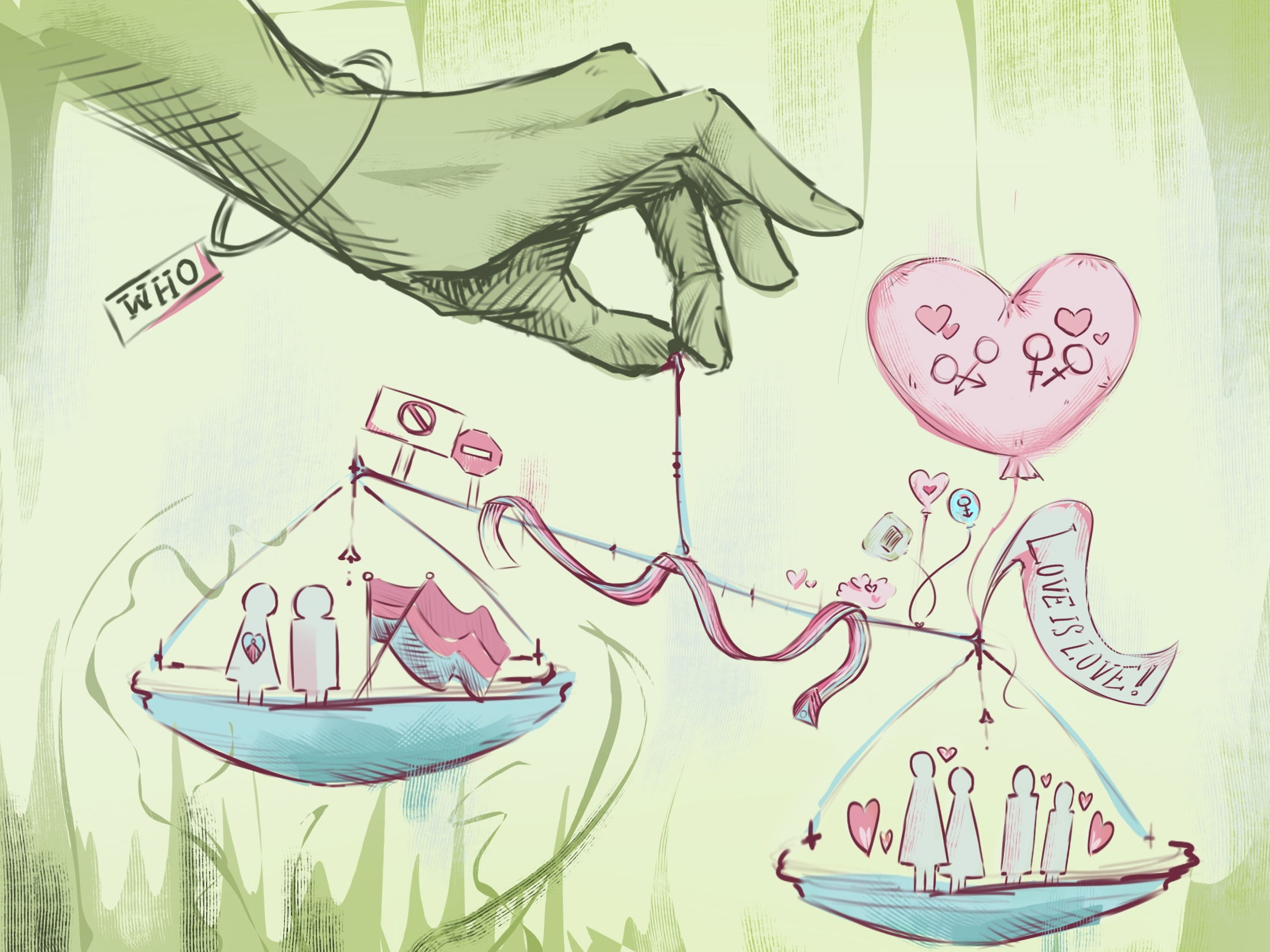
“Queer enough” is a term that makes no sense. Yet, it’s one I see and hear frequently. It’s a large term, with multiple nuances and ways to invalidate members of the queer community in various ways. The one I see most frequently is invalidating one’s sexuality. No one should have to prove their queerness or that they are a member of the LGBTQIA+ community. However, queer people who are also attracted to the opposite gender have to deal with the accusation of being insufficiently queer, or not ‘queer enough’.
If queer people get into relationships with the opposite gender, they are often invalidated and alienated from the rest of the community. This exclusion doesn’t just happen to bisexual (an umbrella term for those attracted to more than one gender, including pansexual, omnisexual, and other similar terms) individuals, but also transgender people. Damage from within the community undermines the unity of the movement, even though unity is at its core.
A pansexual woman in a relationship with a man shared that she often feels as if she is seen differently than other queer people simply because she is dating a man. She feels very uncomfortable with people questioning her identity; they often make her feel separated from a community that she’s a part of. She isn’t the only one who feels this way. There are many instances in which people are shunned from the queer community for being in opposite gender relationships, where terms such as “passing by” are used to describe the way these heterosexual relationships appear. People who fall under the bi umbrella are often told they are ‘passing by’ and going through a phase of identifying as bisexual. There is also a term for this discrimination, known as bi erasure. This type of discrimination adds insecurity and distrust within the community; with the normalization of the ‘passing by’ culture, marginalized queer people feel discouraged from identifying with the community. However, bi erasure is not the only example of this separation within the community.
Transgender individuals are undeniably in the LGBTQIA+ community; they represent the letter T and 12.1% of the community. However, transgender people who are heterosexual are frequently reduced to the latter and invalidated, rejected from being ‘queer.’ I know a person in a similar situation, being a transgender male who identifies as straight. He is left out of the community and considered inferior due to his sexuality. Meanwhile, my sister, who is a transgender female who identifies as lesbian, is very involved in the community and even has partaken in some of that shunning herself at times. They both try to interact and be among the community equally; however, he is treated inequitably. He is mischaracterized as a “straight male” and told that he simply doesn’t belong in the community. This is ridiculous considering that queerness is both about sexuality and gender identity; it should not be measured by someone’s. Being a straight transgender male does not make you less of a member of the community.
The impact on the community from this “bi/pan erasure” and discrimination against transgender individuals are destroying the security of the community from the inside. While the LGBTQIA+ community is aware of the discrimination from non-allies outside of the community, discrimination within the community often doesn’t receive sufficient spotlight. A bisexual friend personally told me that he feels less willing to join the community due to the discrimination he is afraid to face.
With the creation of the term “bi erasure” and the recognition of what is going on in the community, there are still many ways for the community to amend the way they treat bisexual, pansexual, and heterosexual transgender members. While the treatment has led people like my bisexual friend to refuse to interact with the community at all, there is still a lot of hope from people who still want to be a part of the community. Calling out this discrimination as it happens or reminding them that they are just as welcome as any other member would be adequate to achieve security and greater strength in the community, and would hopefully make non-members realize the seriousness of the issue. Even though Andover’s community is generally accepting, many people I have met outside of here are not. I urge you to inform others and spread awareness of the constant separation within the community, as it seriously impacts not only its unity, but the independent individuals.