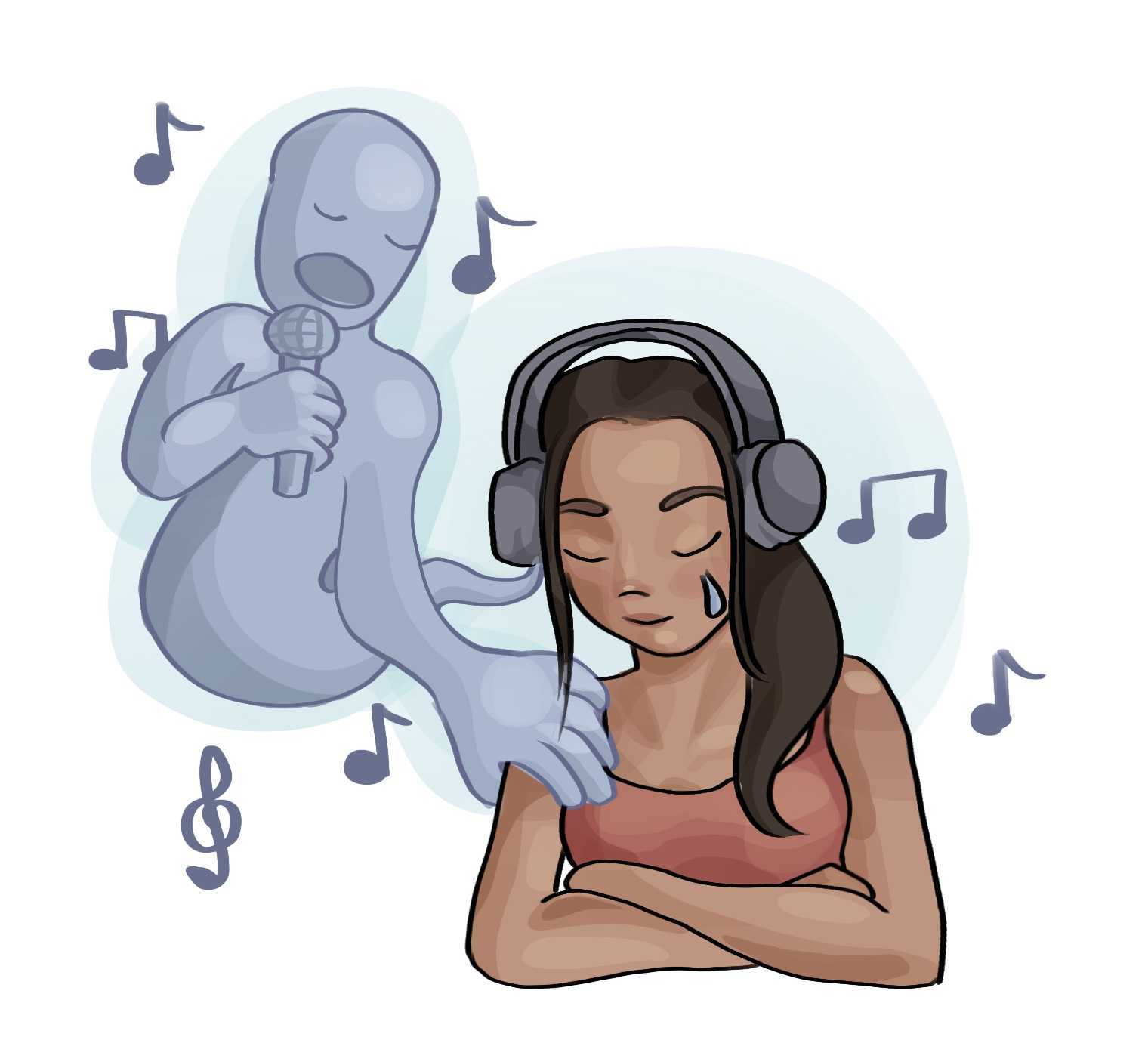
Tickets for Phoebe Bridgers’ “Lost Tour,” spanning 45 dates, sold out almost immediately. The concert scene fans shed hundreds of dollars out for wasn’t bubbly dancing, but cathartic tears. As a die-hard fan of her music, I can affirm that her lyricism is quintessentially what the internet might call “sad white girl music.” Dark imagery, references to existential dread, and the quiet friction in a failing relationship; she deeply appeals to her listeners’ vulnerable side. I’m not alone in my enjoyment of this kind of melancholic music: “sad” is the most searched up term on Spotify for Gen Z listeners. Almost coincidentally, two-thirds of the adolescent population suffers from, or has experienced a mental health problem. In the height of our panic attacks and depressive episodes, the music that we listen to seems to be from these types of artists. Is it that we find solace in their words, or more despair? Not only that, but we are often setting the tone of our 8-a.m.s and our post midnight homework sessions with this wrenching music. Is our obsession with sad songs sending a message to ourselves?
The music at a high school dance is always pumped up — the goal is often to get us out of our self-conscious thoughts and into the moment. While dancing and laughing, we tend to emulate the fiery drums and spry lyrics of songs like “I Want to Dance With Somebody.” This music about young love and coming of age creates an atmosphere. The antithesis to these are the “sad songs” that Gen Z seems to have on repeat. If it is lyricism and upbeat character that characterizes party songs, what about melancholic ones? Often, a song is labeled as “sad” because of its slower moving beats and references to the more day-to-day struggles average people have. The chords we hear have a pivotal part in the color, or tonality of a piece; minor chords radiating more pensive moods. In lyricism too, when a singer describes an experience we’ve had, we can reflect on the emotion we’ve assigned to it. When Bridgers writes, “…running around in circles” and “…look at the sky […] and I feel nothing,” it certainly causes the audience to rummage for memories of such moments. Perhaps it is these, slow moving songs, and pensive lyrics that cause us to reevaluate the situations we’re in. Knowing that, what kinds of benefits will we find in these songs?
We gravitate to expressive methods of coping when stuck in depressive spirals. Filling up pages of a journal with handwriting that gets worse, painting in abstract forms, or even finding pictures in the clouds overhead. These are ways we craft a story, or narrative out of media presented to us, visualizing our feelings. The music in our ears is more than just words; it’s fuel that crafts a narrative based on those thoughts that are akin to our own. Comfort is found in knowing that someone also had the same negative thoughts we’re experiencing now, so much so that they wrote a song about it. Society has constant push back to the time adolescents spend ruminating in their sadness or engaging in media that seems to invite these thoughts. A CDC survey indicates that while 93.1% of parents believe their children’s mental health is supported, only 2 in 5 teens agree. In truth, youth are bombarded by negativity and stress: not only rigorous classes, but the ever-depressing news and a lingering worry that the world won’t survive long enough for them to live in it. At Andover mental health is even more so in the depths, with 20% of the community acknowledging a desire to be evaluated for depression, and 33% anxiety. In this onslaught, music doesn’t appear to be the problem. During stress, we often feel the need to latch onto familiarity; a song can be replayed, and we’ll be once again reminded that dark feelings don’t last forever. Without putting in precious energy, our thoughts are vocalized through music.
The realm of sorrowful songs is on the rise, and of course, roping youth into it. More and more creators openly discuss their depression and other mental disorders. They proceed to then make music along these lines, narrating their lives to a wanton audience. Fortunately, we have much to gain from these creators. In our darkest and loneliest hours, we can still be drawn to kinship with our favorite singers and their slow beats. Sad music emphasizes reflection that Andover students need in their daily rush. Phoebe Bridgers herself notes that writing her melancholic songs aren’t just a rumination, but a nod to moving on and processing feelings. So yes, do press play on that music while lying on the floor of your room. Or take it at eight a.m. with your morning coffee — I’m not the judge.