The worst thing to discover as you’re relating your solution to a math problem to a peer is the teacher letting you know you’ve done it wrong. Similarly, I recall leaving my friends in uncomfortable silence with such a callout. For minutes, they were harping and pecking at the foolishness of a plant-based diet, and more specifically, their distaste for another student’s avid promotion of it. I continued to nibble on my meatless meal, uninterested, until one of them lamented that eating plant-based is “too expensive.” I immediately responded with, “That’s not true.” What irritated me about their silence wasn’t her rejection of the diet, but instead the confidence she had to speak with no knowledge of the subject at all. With one Google search, the University of Oxford can tell you a sustainable diet can cut costs by up to a third. I have heard iterations of this type of conversation time and again: about politics, social issues, or even my own personal life. Why is it that we’re so ready to comment when we’re not familiar with a subject at all?
Being an adolescent comes with a tendency to overestimate our knowledge, and dismiss those who don’t agree with us. My own mom is unimpressed by the numerous times I have told her that “she doesn’t understand anything,” particularly when it comes to my personal decisions. Yet when it comes to important, real-world matters, adolescents speak before even fleshing out their thoughts. The uninformed political takes, half-baked reasoning, and lack of understanding of systems like classism shouldn’t be shared at the dinner table. Blanket, overconfident statements breed misinformation. Like the campus cold, misconceptions about the political and economic state of the world can spread throughout your friend circle. And once you’re proven false, you’ll realize that you’ve only embarrassed yourself. The most dangerous thing that lies among us is quite possibly those who are unaware of what they do not know. In this case, we are falling victim to the Dunning-Kruger effect, where humans tend to overestimate their knowledge in an area where they have little expertise. The study involved students at an elite university who earned low test scores, but predicted their results to be higher than they truly were. The study reads like a version of Andover, yet instead of test scores, it’s surface-level conversations about meaningful subjects, turned obsolete because of a lack of knowledge. When brought to a space like Andover, where each student is of exceptional caliber, it’s natural that serious topics come up in conversation. But, Andover also asks students to perform to fit in; to pretend they’ve researched, or are prepared to commentate on a serious issue, even when they’re not. If everyone around presents a fountain of knowledge on politics, you’ll feel pressured to contribute.
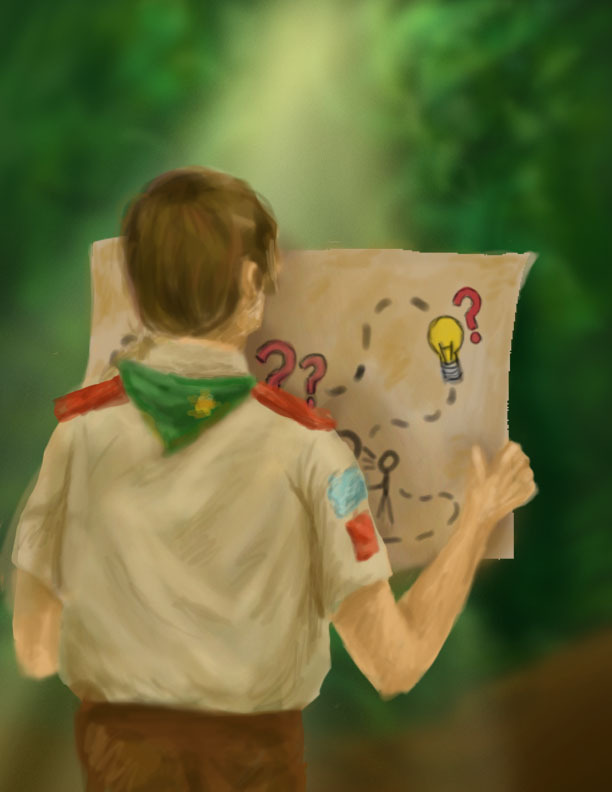
Humility is the genius’ weapon, not their weakness. The smartest minds at Andover will approach a subject ready to absorb the knowledge, unashamed of not knowing. Drop your defenses to your shaky position, and admit you do not know. Socrates himself famously declared, “I know that I know nothing,” an antithesis to that oracle’s purpose of depicting him as the smartest man in Athens. Though we mere high schoolers are not near the depth of knowledge that Socrates may have had, we can share some of his humility. As adolescents, we are certainly afflicted by cognitive bias, yes; we feed ourselves words that affirm our viewpoints and self-esteem, rather than ones that negate them. But, as Julia Galef puts it, we need to flip our mindset from soldier to scout. Galef claims that the soldier mentality is egotistical and driven by the belief that being wrong is a personal concession of power. Yet, the scout seeks out to survey the terrain, drawing a map despite knowing that the lines are subject to change. To obtain this scout mentality, we need to retain impermanence in our thought processes. Notice what factors change your mindset and what affirms it. Contradictions should strike your curiosity, not stave it.
Perhaps it is naive to expect adolescents to dive into a conversation and admit they know nothing. Living among the brightest, we feel even more pressured to present that we know 100 percent, when it is truly 50, at best. Yet, when making dramatic statements to affirm our beliefs, we need to step back and recognize our role. Are we acting as brash, overconfident, but underlearned soldiers? Or perhaps the resourceful scout, building knowledge through others’ words? If these words paint you as a soldier, I can be the first to tell you that you don’t know anything.