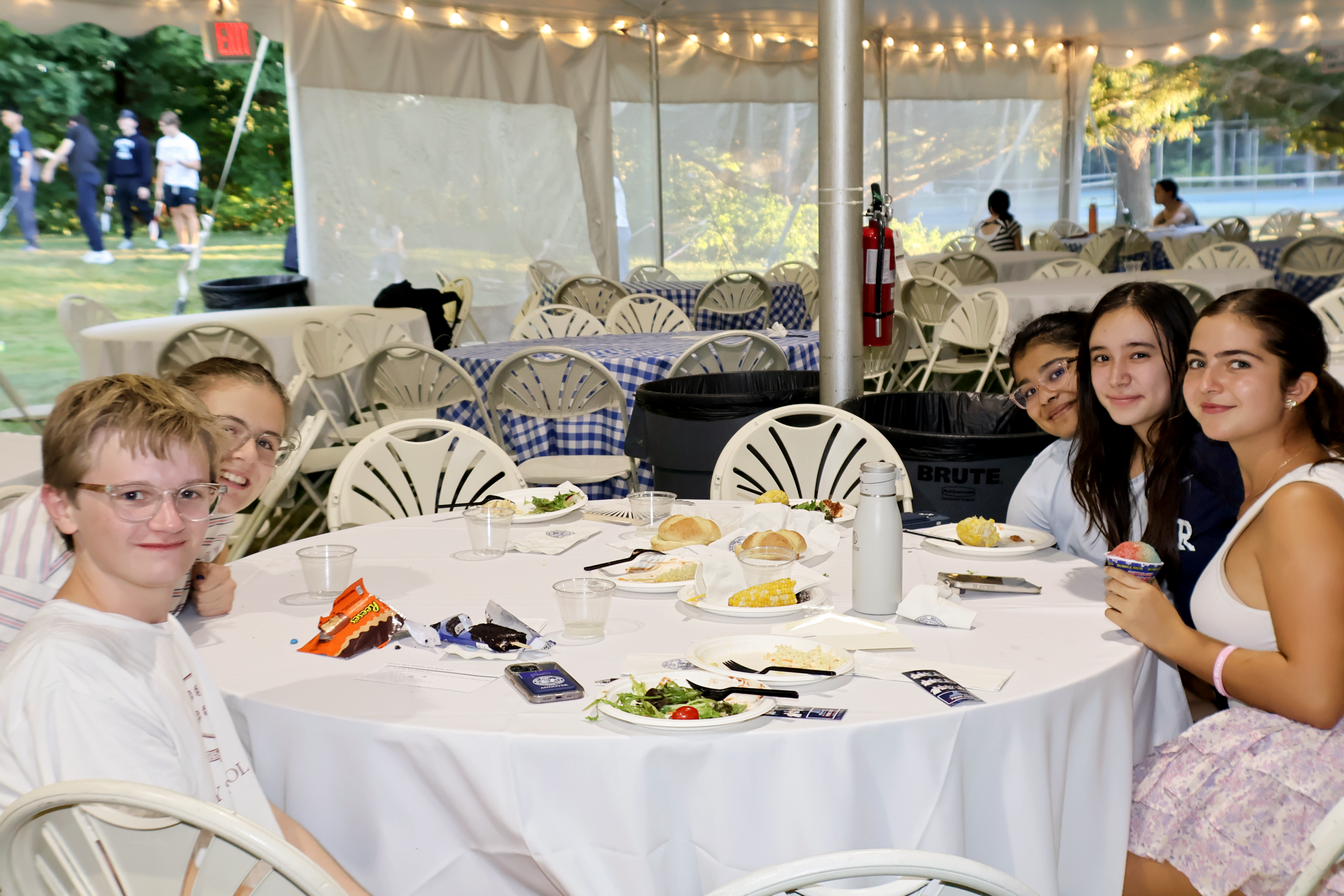
Students in the Class of 2029 smile after a picnic-style meal in a tent.
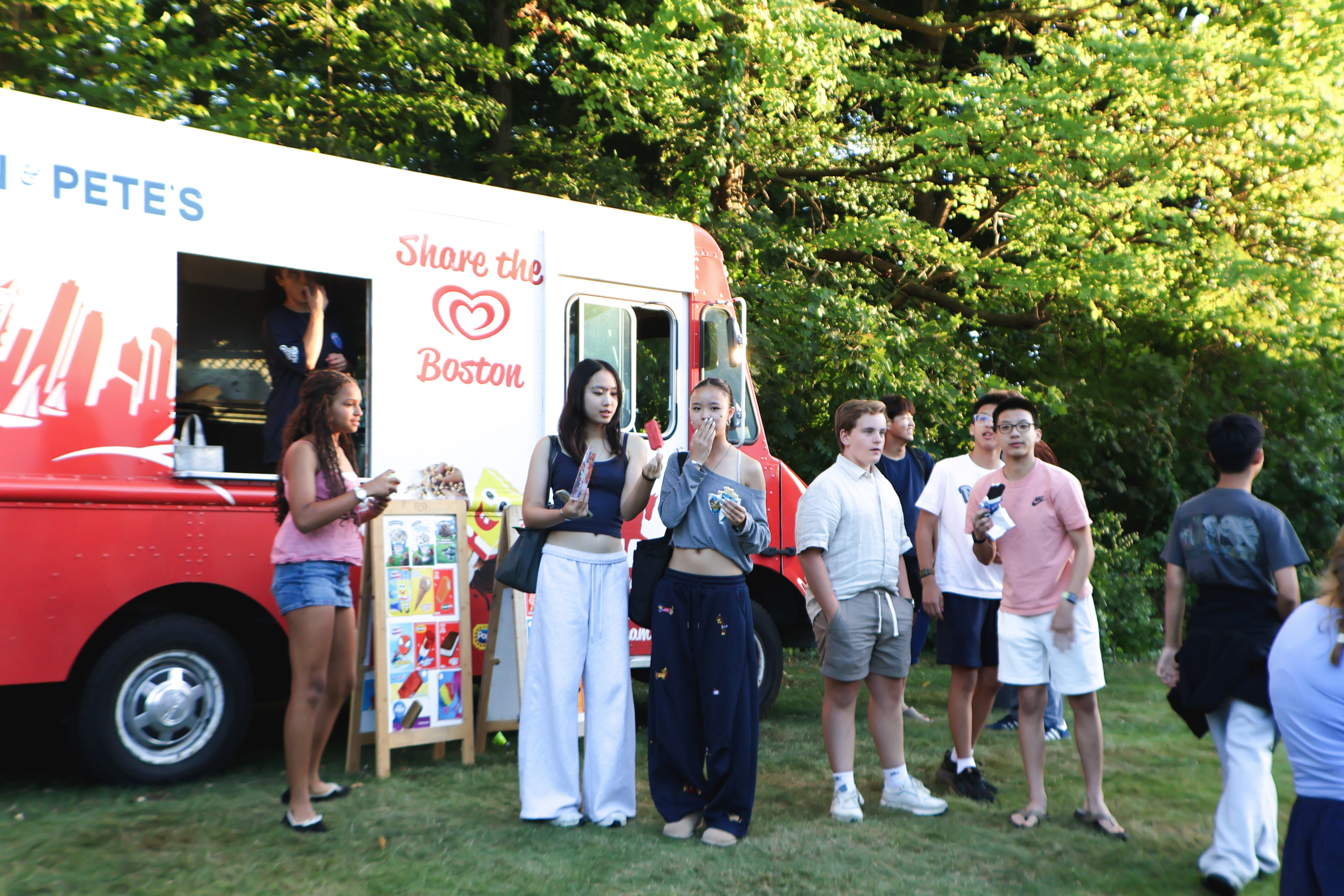
The Class of 2030 enjoys an ice cream truck stationed for the class dinner.
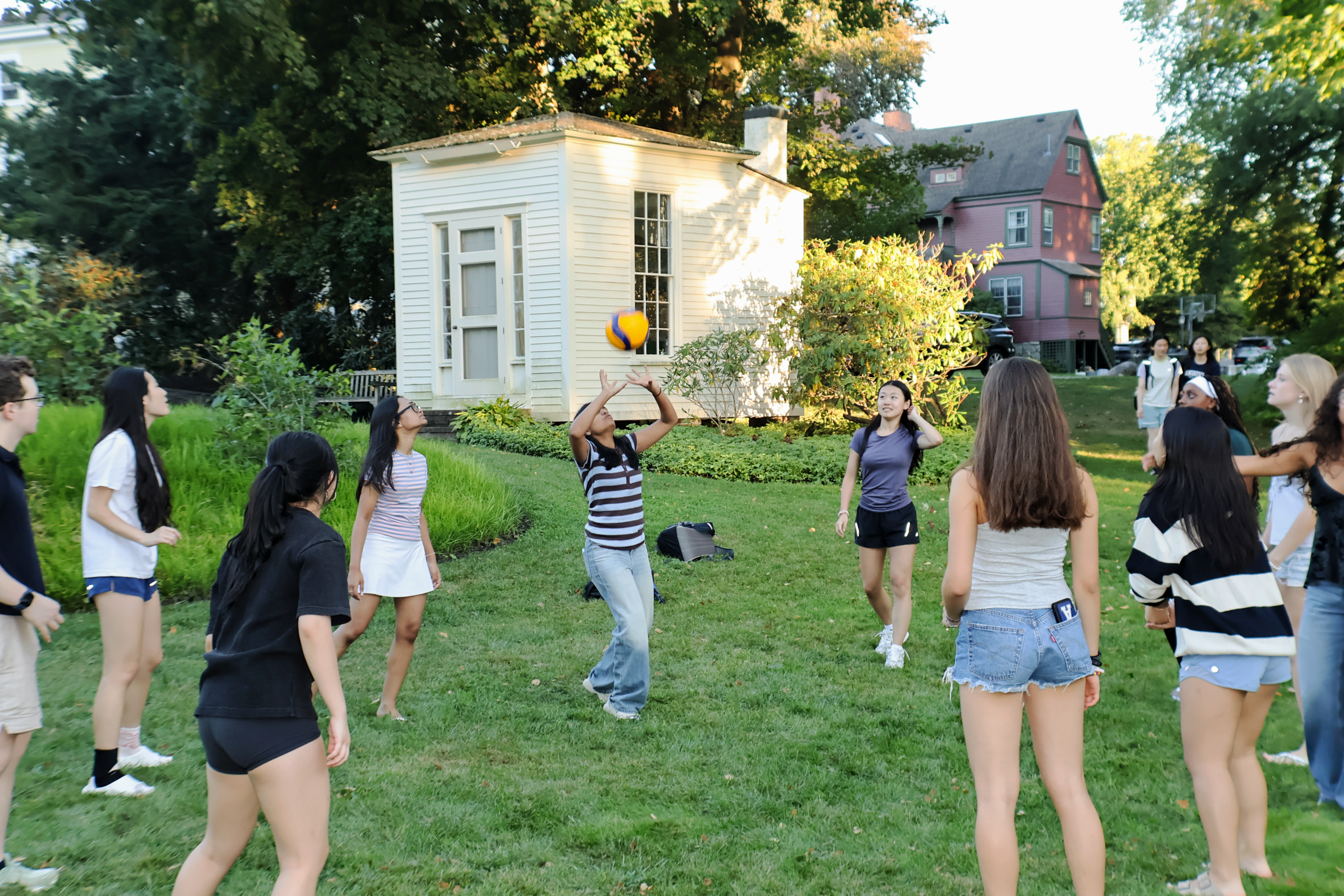
Students in the Class of 2029 toss around a volleyball on the Phelps House grass.
Dianne Domenech-Burgos, Chief of Staff and Assistant Head of School for Strategic Planning, who helped organize the dinners, explained that these annual dinners were initially implemented to foster connection within student classes.
“We do a survey with the Senior class each year, and last year many people said they didn’t feel like they had a chance to meet everyone in their grade. Also, when we surveyed students who had been at [Andover] for four years, many said they didn’t feel like they had a trusted adult on campus. So then we began to think, ‘What can we do to address these issues?’” said Domenech-Burgos.
Kington explained how the Head of School Office designed this year’s dinners to address a historical lack of student interaction with him. He elaborated on recent trends in academic stress and competition as a primary driver for hosting these types of events.
“Last year, I was criticized in a Phillipian article because a student felt that I didn’t interact enough with students… We thought a lot about, in recent years, about the obvious stress that lots of students feel coming here. We’re a very competitive school, academically demanding [and] socially demanding in lots of ways. The biggest protection against the negative impact of those is social connection, without a doubt. Connection with families, connection with peers [and] people,” said Kington.
Christian Martuscelli ’30 saw the class dinners as an opportunity not only to connect with other members of his class but also to become acquainted with the Andover community.
“Well, I really just attended the dinner to have fun, see some of my friends, and get some good barbecue food. I also thought it would be a nice opportunity to say hi to Dr. Kington and get to know him a little better. Since we don’t always get the chance to talk to faculty outside of class or other school activities, I thought it would be interesting to spend some time with him,” said Martuscelli.
For some students, the class dinners saw no visible improvements from last year. Allysa Katana ’28 felt that the event did not incorporate as many ways for students to interact with one another, particularly new students.
“It was very underwhelming. We did the same thing that we did last year, and last year wasn’t effective, so I don’t know why they did it again. First, there weren’t enough activities to do. All we had was ice cream, and then the food selection in addition was very limited. It didn’t provide enough opportunities to bond, especially for new students. We haven’t met the rest of the class yet,” said Katana.
Christian Robinson ’28 suggested that the success of these events relies on creating an environment conducive to bonding between students.
“What makes it ineffective is if it doesn’t make people want to branch out and talk to people they don’t know as well. What makes it effective is if it does do that. There are opportunities for people to talk to people that they never really spoke with before, and opportunities for games and collaboration,” said Robinson.
William Wang ’29, a new Lower, said the dinner gave him an opportunity to meet returning students and other new members of his grade. Along with calling for more activities, he noted that the dinners can benefit from more coordination in the future.
“It was incredible because it was a very social event, so I got to meet a lot of Lowers. Obviously, I’m a new Lower this year, so it’s great to meet a lot of the returning students and also the new people… It was kind of scrambled. Different people showed up at different times. [If] the whole thing just comes together as one, people will be able to socialize more. More activities and events where people can meet people they don’t know would also be beneficial,” said Wang.
Moving forward, Dr. Kington said he may designate student leaders to help promote interactions through such events.
“We might try to think of more innovative interactions of various sorts. It’s worth also thinking about having a subset of the students really promote connection… It’s easy for Lowers and Uppers and Seniors, that’s when we could choose the student reps or others to play more of a role in making sure people interacted with different groups. We could have student leaders of all of the clubs [and] the student leaders who just may come early for leadership training at the beginning of the year.” said Kington.