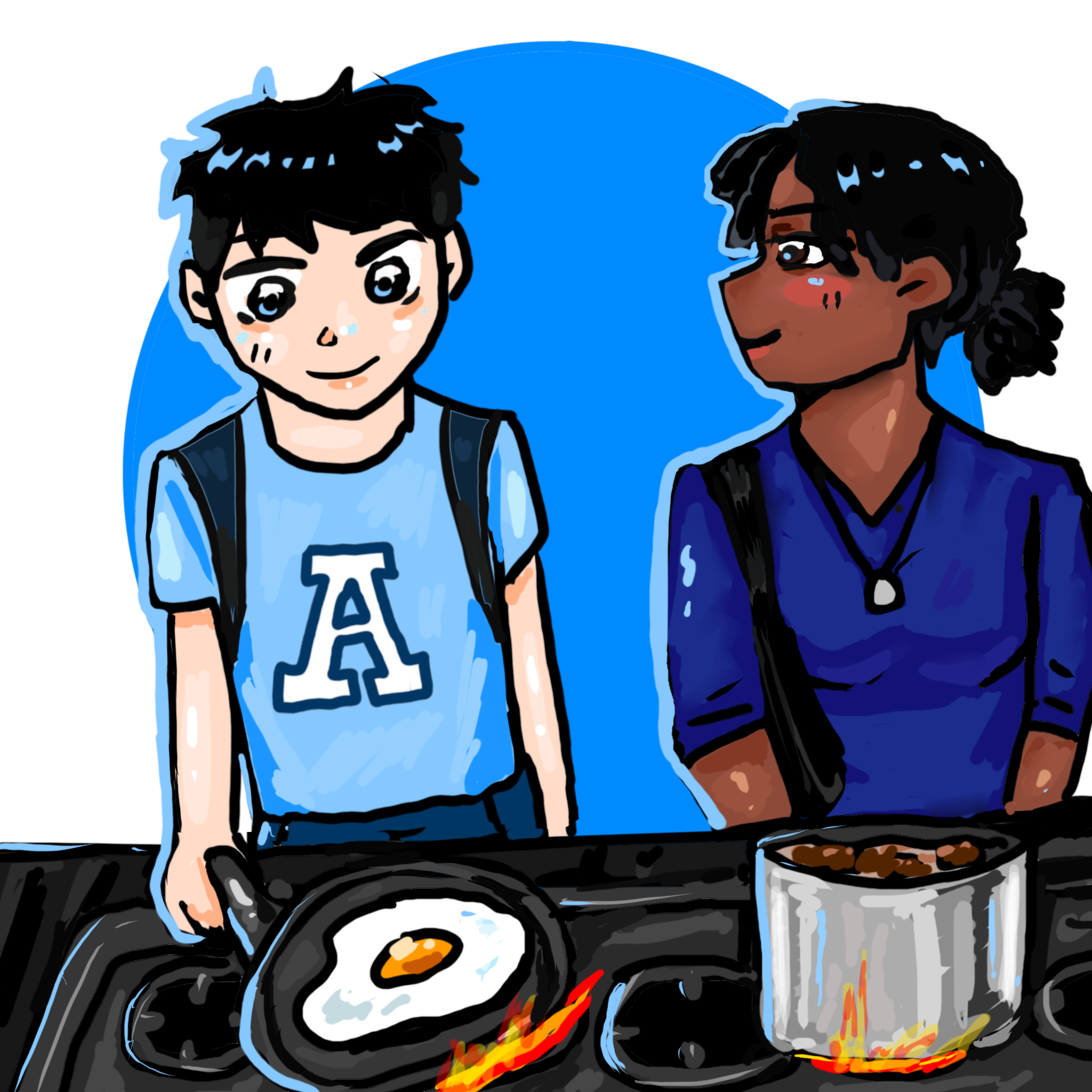
Before coming to Andover, I would listen to my sister’s stories about Andover. Amidst her complaints about the stuffy dorms during the spring, to the happiness she felt preparing for various dance events, one thing was pretty much constant: The food was meh. While I wasn’t sure what that meant initially, I’ve come to understand it after my first year. Yet, for the sheer volume of food the Paresky Commons staff makes in a short time, it isn’t unreasonable that the food isn’t Michelin-level, and their work is deeply unappreciated in that context. Nevertheless, on top of the ambivalence of the food’s taste at Andover, this dissatisfaction could suggest we want more from our food than just its taste. The act of cooking provides exactly that. It reveals important values about food, the appreciation of agricultural labor, the decompression for stressed students, and the aiding into a sustainable individual, that are not visible when we are only passive consumers. In fact, in order to capitalize on the benefits of cooking, Andover should offer spaces for culinary exploration for students.
Cooking reveals the hidden physical demand in preparing food, pushing you to understand the hard work people do across the culinary spectrum, from agricultural labor to the preparation in places like Commons. When you start cooking, you start to see that the ingredients that make up dishes are genuinely from the earth, and need to be cultivated through human effort. The quality of these ingredients is thus directly related to the work that laborers, farmers, and other developers do in order to create healthy and good quality ingredients. Additionally, as one gets into the rhythm of cooking regularly, it becomes so apparent how much effort it takes to prepare, cook, and clean the kitchen after cooking. The grueling repetition of washing the dishes, pans, and utensils is often the most arduous part of cooking, taking up potentially hours depending on the type of food made. This experience is then transmitted as a form of empathy regarding the work of restaurant and food preparation workers. If this perspective was applied to campus life by providing accessible kitchen spaces, students may be less inclined to dismiss the efforts of the dining staff, because they understand how hard it is to make food.
On the individual level, cooking offers forms of independence that we could benefit from. Firstly, in response to the rising costs of living, knowing how to cook your own food could offer important financial independence. When you cook for yourself, you often save money by not eating out or ordering food. As boarding students, it may be more difficult for us to realize the impact of our spending habits, and learning to cook could help with the reality of everyday costs. While attempts to cook may occur during the summer or breaks, Andover has the opportunity to try and integrate an important part of real-world literacy into our boarding experience. If we truly want to promote the holistic growth of each student, why not include such an important part of everyday life?
Secondly, you can choose what you want to eat. While this may be obvious, the ability to choose what you want to eat can help with mental health. If you’re feeling unwell and want a dish that reminds you of better times, cooking offers a path. Without an independent choice, that dish may be unavailable, especially if it’s unique to your family and not common. These desires can be ameliorated with cooking.
While not its main use, cooking can also be a form of creativity and an extension for discovery. After learning the basics of cooking, many often ditch the land of recipes and use “feeling” to make food, or even try new ideas. For example, if you like a spicy numbing sensation from a spice like Sichuan peppercorns, and also like the savory background of a carbonara, why not try incorporating them? Additionally, when you cook, you deal with the process of how a certain dish is made, which usually is related to the culture that it comes from. For example, many stew-based dishes need to be cooked for a pretty long time because the less tender cuts of meat need to be tenderized. The reason they use less tender cuts of meat is that the people who developed the dish often only had access to tougher meat, a problem solved by cooking it long enough for the collagen to break down.
Furthermore, cooking helps us visualize the hardship past humans had to go through, who developed our food. Learning to cook what once came from peasants extends the experience from just another meal to a realization of the resourcefulness of the people who came before us. This is the difference between just eating a dish and cooking it; you get to see the process that has been passed throughout history. When we just eat it, it feels more like a disconnected product, and we are unaware of what inspired or even forced the creation of the food.
Despite our limited free time and current kitchen restrictions, the potential for culinary enrichment at Andover remains a vital, untapped resource for those of us feeling the weight of the term. By allowing the exploration of the culinary landscape, Andover would allow us to learn about the personal agency and empathy that appear when cooking becomes a natural part of life. Similar to how we stretch our intellectual capabilities when we learn about complex topics in our classes, this would allow us to stretch our culinary boundaries, skills, likes, and relationship with it. Ultimately, the best part of this lesson is the conclusion: after the work is done, you get to sit down and finally taste the discovery for yourself.