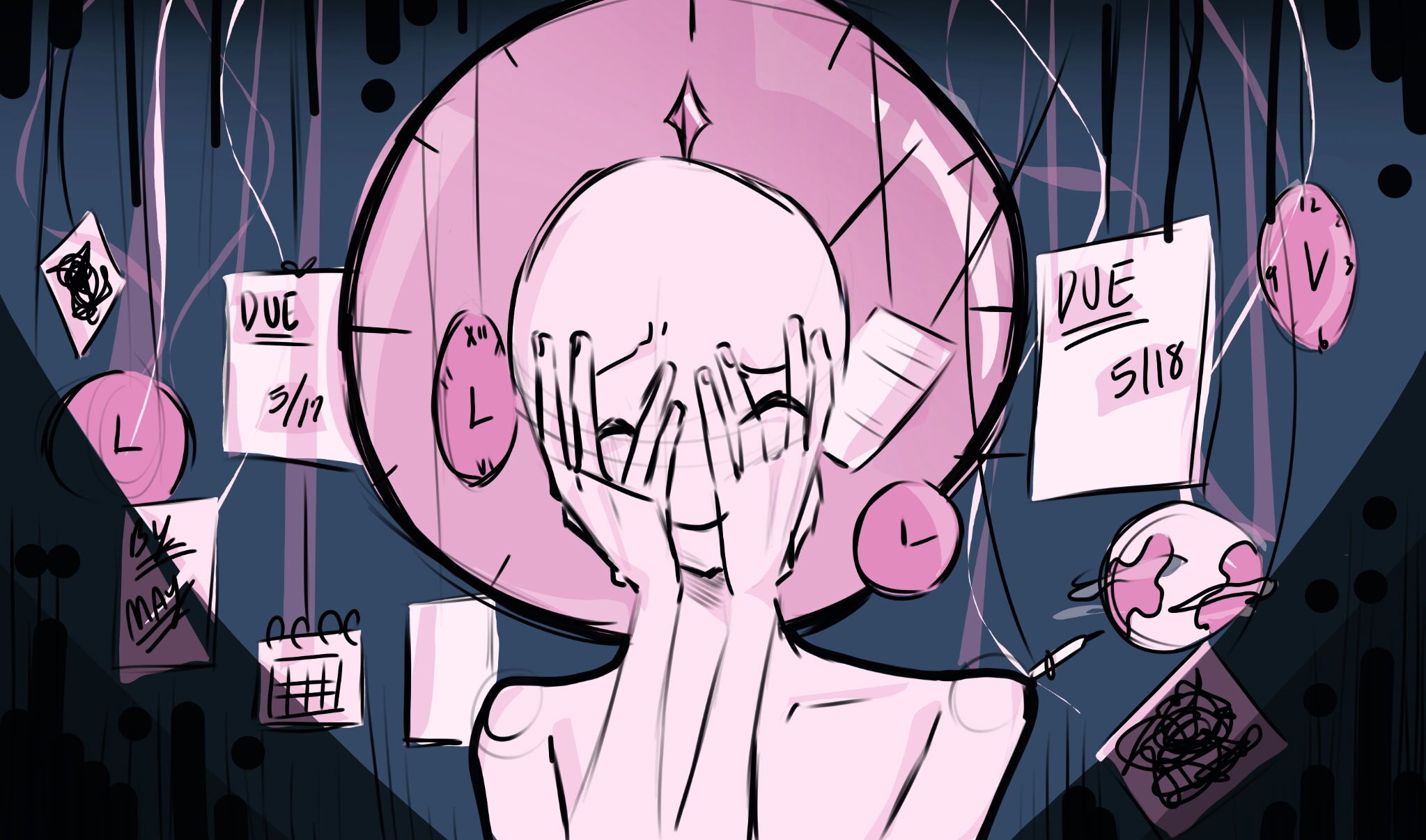
I watched a YouTube video by Kurzgesagt, an animated educational channel, on the impending doom of Germany due to its aging population and lack of infrastructure to encourage new families. I remembered watching a video by them years ago on the general fertility crisis, as well as one last year on how South Korea had passed the point of no return. Literally everybody saw this coming, and yet it hasn’t been given enough attention to be fixed. It reminded me of the procrastination I see among students. I highlight cases like this where the stakeholder and the party in control are the same. Situations where problems seem too large to fully comprehend seem to be a universal experience, for entire nations, as well as Andover students. I believe the path to improvement as a society begins with intentional awareness, in our choices as individuals and roles in our communities.
In terms of academics, I think becoming tunnel-visioned in the moment is a problem emphasized at Andover, given how it rewards planning rather than improvisation: courses, clubs, and stories for applications. As a result, the days pass smoothly for most, with an onslaught of assignments before a brief reprieve during the weekends. On the other hand, those who have not developed this habit of programming are often playing catch-up: I often see people, most notably lower-classmen, resign themselves to an unnecessary all-nighter, where they are aware that they have a massive task before them, like an ominous figure in the mist, but do not comprehend it thoroughly enough to plan out its execution over multiple days. So they wait until the last moment, where the nebulous future condensates into a long and exhausting night of scrambling.
Perhaps it’s reflective of the nature of untamed human thought, and action requires the alignment of the thoughts in your mind on the task before you. The part of you that wants to scroll or snack or whatever else concedes to the impending doom before you. On a personal level, acknowledging these realities early on is a trainable skill: focus. However, on a group or even national scale, people often lack the imagination to acknowledge the scale of the problems before them. Politicians think of climate change as a facet of the political campaign instead of the apocalyptic threat it actually is. Fittingly, our society thinks the same way. The problems are too large to believe unless they arrive right in front of us.
As students, we can run an all-nighter and scrape by; a lot of our work in our junior and freshman years can be solved within twelve hours. But this idea becomes less and less true as we get older. I, as well as some friends, took our first APs, and cramming did not go well. More seriously, my grandfather had a big heart attack earlier this year. We lucked out, and he squeaked by, but the severity of his declining health hadn’t struck me until then. I think part of the reason it didn’t hit me before was that it was uncomfortable to think about and I had nothing reminding me of it. Like many of our more serious problems, it lived like a forgotten candle on the windowsill, burning silently, with the only attention you pay it a small voice in the back of your head, nagging you about the nearly depleted wick and the glass that threatens to shatter.
On greater stages, by the time these problems are immediate enough to fully grab our society’s attention, they are often too late to fix. The population crisis I mentioned in my opening is an example alongside climate change. Even as their effects become increasingly tangible, they almost certainly won’t be addressed until they absolutely have to. I don’t mean the last moment before the damage is irreversible, that was a decade ago, but once there is literally nothing else to possibly discuss but the ending world.
I do not write this piece advocating for monumental change or impact, but the acknowledgement of the value in awareness. That change begins when its necessity is accepted. I hope that we can realize that the skills in managing ourselves that we develop at Andover can someday be expanded to our roles in directing the actions of our communities.