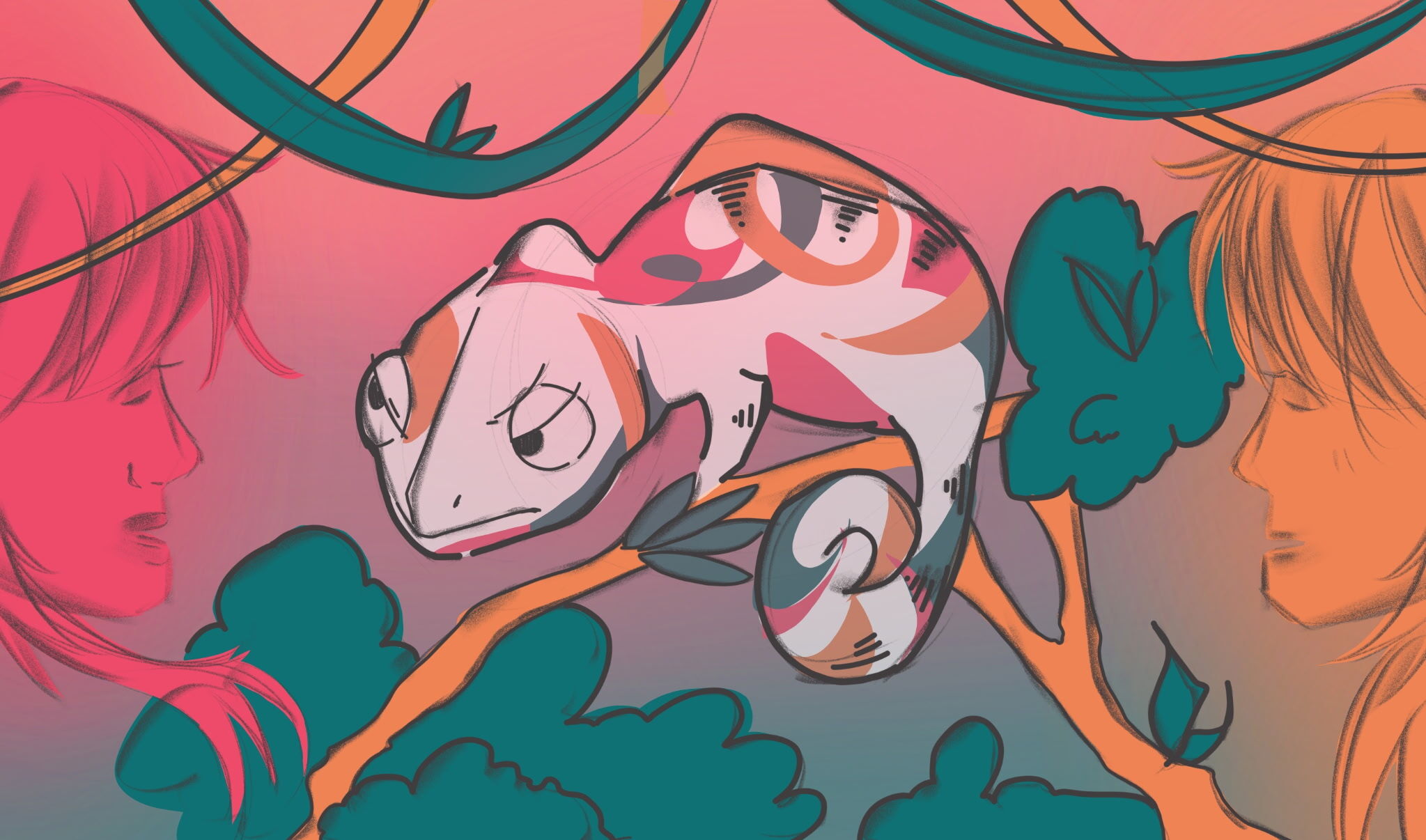
It’s an Andover rite of passage to watch as a flood of people drift towards the chapel every Friday — some yawning, others laughing, but all carrying themselves to the same location. As I exited Spanish class last term to head to ASM, I would zip up my black North Face jacket — also known as the quintessential, copy-paste academy attire, because any other color makes you stand out too much. A sea of diverse students that have somehow boiled down to be represented through the same black winter coats, use of slang words like “low-key,” and hairstyles. In an effort to conform, we often go too far. We filter ourselves to be more palatable; for women, more feminine-presenting in formal settings, calm and friendly around those of “higher social standing,” but loud and unafraid among friends. There’s a certain group of people around whom you express your latest hyper-fixation, and others whom you wouldn’t dare bring it up around. Is that inherently wrong? Not at all, we have friendship circles for that very reason: some friends are meant to be the kind bonded by mutual waves on the paths. However, is it really that Netflix show you enjoy, or is it the gratification you get from assimilating with someone who likes it too? When someone you admire has a catchphrase, why is it that our friends suddenly comment on its entrance into our vocabulary? How do I know if people are seeing my true self, and not the amalgamation of twenty personalities and interests I’ve been influenced by? Have we become reduced to human shells, with chameleons living inside?
In elementary school, mimicking was in our nature. If a cool or popular kid came around and asked to be our friend, we would pick up all of what made them so likeable. Once someone decided their favorite color was blue in elementary school, yours was too. Your mom or dad knew it too; they likely didn’t want you hanging around with “that crowd.” There’s resounding evidence that when your friends are smokers or don’t care much about school, that’s who you eventually become. In fact, entrepreneur Jim Rohn said that “You are the average of the five people you spend the most time with.” Interestingly, his purpose in saying that was for personal betterment, because the best gift you can give to yourself is surrounding yourself with people who help make you better. That type of reasoning in particular is frequently used by Andover students, especially when asked why we subject ourselves to difficult courses and a host of extracurriculars. But maybe betterment has devolved into chameleonic behaviors. There’s not a single set of five people who influence our behaviors, but instead every slightly different friend circle we’re a part of. Besides our friends who pour their hearts into music, I have to falsely present myself as someone who can sit down with my instrument longer than two hours at a time. When going to campus events, it’s imperative to present yourself as more feminine to distract from the way having such short hair stands out. Suddenly, you realize your favorite color wasn’t blue after all, but now the color’s presence is permanent in your life. This “good” influence has developed into conforming to our surroundings, like a circular block melting to fit into the rectangular hole.
We’re around friends and peers each minute of PA, no doubt. But we don’t have to be chameleons for every moment of it either. The biggest factor of being a chameleon is the preceding fear of situations. A friend might invite you out to that movie you’ve been waiting to see on a Saturday night with a group of people who are socially in touch: more conventionally attractive, trend observant, and palatable to society. In that situation, will you give up on that movie you’ve been waiting for? Or can you let your guard down and stop conforming to your surroundings? Consider more of what we’ll actually feel in these situations. It’s certainly tiring to filter every word you say, or hide that you still love that cringy TV show everyone dropped in seventh grade. Focus more on the initial gratification of getting to finally see that movie, because the main event is not following the unspoken dress code of gray sweats and a hoodie. It’s difficult to decenter our inner chameleon in these moments, but what will you miss out on if you let it win?
When we’re uncertain, we tend to return to our shells. That chameleon self shows everyone just what they want to see: a social butterfly, a fashion trend follower, or a trashy reality TV enthusiast. While chameleonic behaviors are inevitable, there comes a time when we’re forced to stop and notice them. When the way you talk comes before the enjoyment of the hangout, or the makeup you aren’t wearing comes to matter more than the conversation itself, it’s gone too far. But more than that, what we don’t realize is the number of chameleons who live among us. The people whom you’re molding your actions around? They’re looking back at you with that same inquisitiveness. Wondering — no, waiting — to see how best they can fit in.