Among many haphazardly placed bowls and cups was a poster paper lying face down. It had an awful amount of pencil smudges from clumsy fifth-grader hands, but the penmanship itself wasn’t bad. The poster was meant to be my fifth-grade self’s future aspirations: to become a neurologist from the same town where I grew up, who loves… physics? While my mom was delighted that I might still be open to becoming a doctor like her, I felt put off. Looking back, it’s surprising I put down those words, drew that image, or thought those things; I can’t imagine myself in science, or even living in my hometown. Maybe most people would brush it off, but somehow those “dreams” left a sour taste that wouldn’t go away. Those little hearts drawn around my future career and interests aren’t at all related to what I love now, which is something more like working in the government. I find it odd that I ever wanted such things, and in that moment, I wondered if those old dreams are a reflection of what I really want — do they show a sense of wonder that I’ve lost? Maybe they aren’t a representation of what we should pursue; we change our direction at many points in our lives. However, they are, in fact, a reminder of people who have shaped us and the naivety we lose in growing up, and perhaps, this is why we need to keep them around.
When we’re young, we’re impressionable; we often take what we notice at face value, and they subsequently affect our character. We’re so easily influenced: by classmates, praise from teachers, and scoldings from family. As I look back on that page, there were signs of people who were such a big part of the small world of a fifth grader. My mom, a figure of pride and resilience, is a physician who tells funny stories about work and makes all of those colonoscopies sound easy. My brother could apply science to solve any problem he wanted, a trait I looked up to. And even the blocky, cursive font I wrote in was the remnants of trying to impress a former friend. All of these people affected what I wanted to become in the future; I naturally saw people I admired, and wanted to chase after them. There isn’t anything inherently wrong with this innocent thought process of children: it’s a part of growing up. Having good friends, a loving community, and supportive adults in our lives is what positively shapes our dreams — of saving people like we were once saved, or protecting people who once shielded us. Instead of throwing out that poster, I left it on the dining table, letting that smudged, cartoonish self-portrait look back into my eyes and remind me of how different environments have changed me. Childhood dreams are a sign that we’re a product of what we experience, and in a few years, when we look back on where we are now, we’ll be able to identify the things that defined our lives back then.
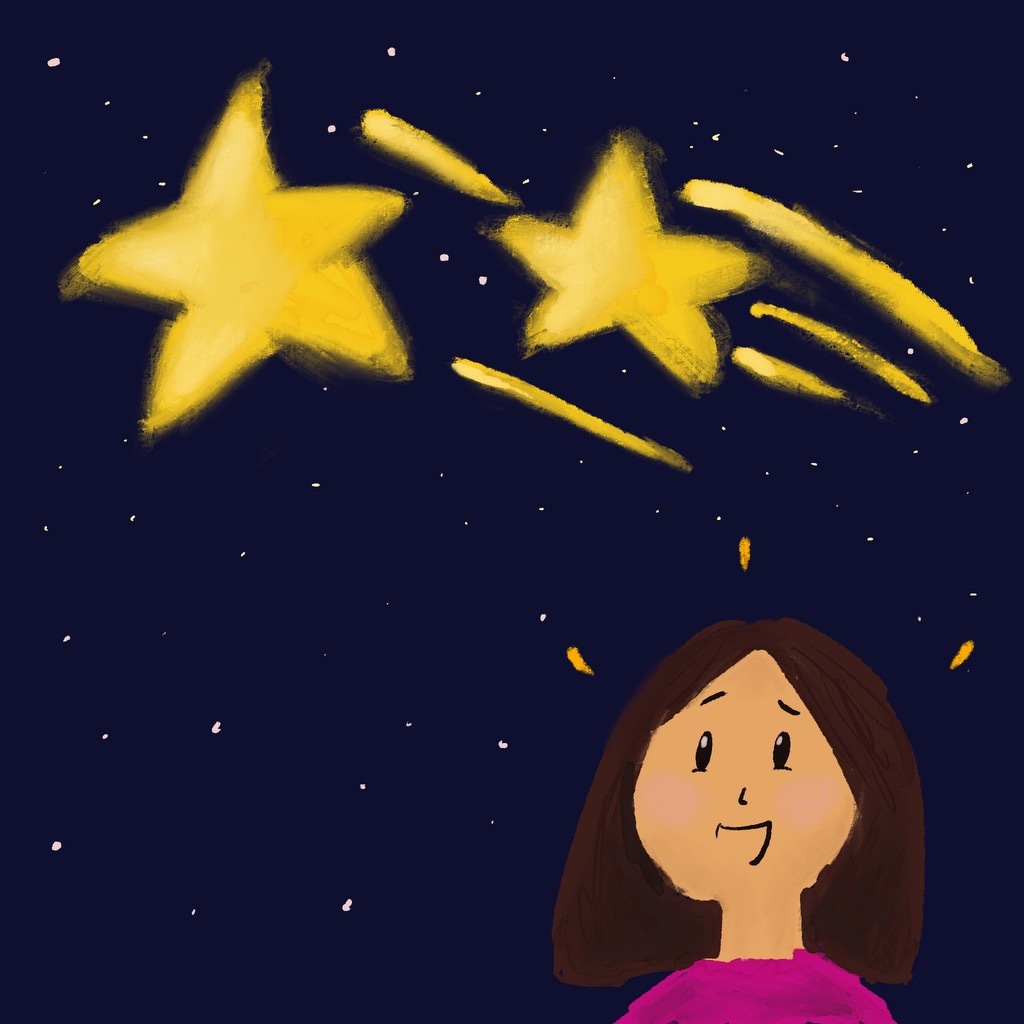
As adolescents, we feel pressured to let go of what is immature — namely, these dreams of ours. But saying goodnight to our youthful fantasies can be difficult because we’d have to learn to let go of our childish belief that wanting something is enough to have it. Now, burdened by reality, we ponder excessively on how much money we spend or how colleges will view our resume. Perhaps we need to stop trying to get rid of these unrealistic dreams, not to fulfill them, but to try and keep some of that innocent, childlike, but still charming sense of imagination. As adolescents, we are too quick to dismiss and let go of what we want for what is normal, what is clear-cut, and what is easy to predict. If we don’t take on wishes that are uncertain, we can never end up with what we want, but instead live knowing what could have been. Even if those dreams seem unrealistic now, never let them go; don’t forget, because even if that career you wanted as a kid is nothing like what you’ll major in, you might find that you were destined to do something of that nature. It is easy to forget what we wanted 10 years ago, or even just 6 months ago, but instead, we should let them watch over us like stars, always ready to be revisited if needed. The stars that are our dreams don’t ever die; instead, they explode and are reborn into new ones.
Looking back on these hopes, it wasn’t stupid to think that being an actress or playing in a professional sports league was possible; that was simply being a kid. Why question our younger selves when we can instead look back and understand what shaped us? There is much to learn from realizing who molds our personalities and aspirations, and it reminds us of our need to be in a positive and supportive community. Furthermore, childhood dreams live with us and are reborn into what we want now, like stars that become supernovae and then stars again. We keep them around to remember, to reflect, and to allow ourselves to keep our dreams fluid. In times when we forget how to wonder and find ourselves stuck, it is these reminders of our younger selves that encourage us to step outside of what is normal and reach for uncertain hopes.